Archeological Sites of Northern Portugal
In my first blog post I tried to make a case for escaping the crowds and tourist traps of Lisbon, Porto, and the Algarve, and embracing the beauty and history of rural Portugal, particularly the areas to the north and east. This area is resplendent with the beauty of the Serra da Estrela and the medieval history of the castles and historic towns located along the border regions with Spain. And let’s not forget the mesmerizing beauty of the Douro River Valley.
And yet, scattered about the north of Portugal are a number of other gems – prehistoric and historic sites that remain undiscovered and unrecognized by tourists. One of the greatest pleasures that I’ve experienced in the 30 years that I have been traveling to Northern Portugal has been the discovery and enjoyment of these hidden gems. These sites offer unique and thought-provoking insights into the history of the area. All of the sites that I’m going to describe are a short (<30 minutes) drive from Casa da Regadinha.
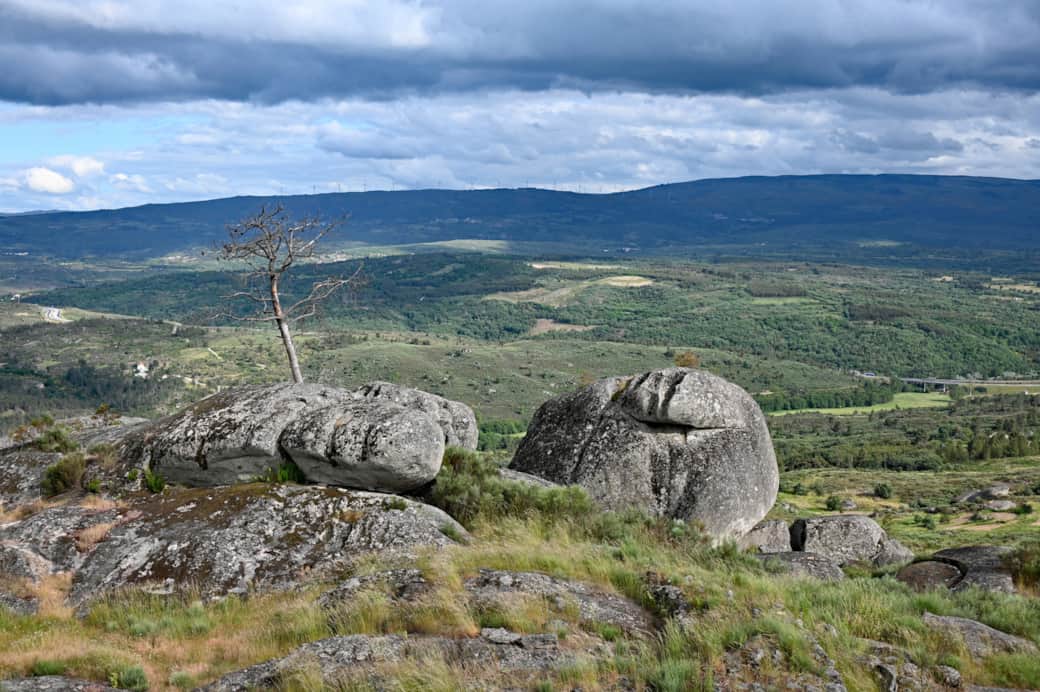
The first such site that I was exposed to on an early visit is an area perched on the ledge high above Muxagata and overlooking the Mondego River valley with remarkable views of the Serra da Estrela. Castro de Santiago is a prehistoric site from the Chalcolithic age (Copper Age – 5000 to 2600 BC) and was the first such site to be identified in the Beira Alta area. The location itself consists of massive granite stones or towers (torre) surrounded by walls constructed to provide a safe enclosure. Archaeological work has uncovered traces of huts and fireplaces, along with multiple ancient artifacts. It is accessible on the Muxagata side by a beautiful half-mile walk from the road connecting Muxagata to Vila Cha. It is also directly accessible by car coming in from the opposite direction. Along with the historical aspects, the views from the top (612 metes / 2008 feet) are stark and spectacular. I am always overwhelmed with the massiveness and random distributions of the granite stones. Each visit to Portugal must be accompanied by a walk to “Castro.”
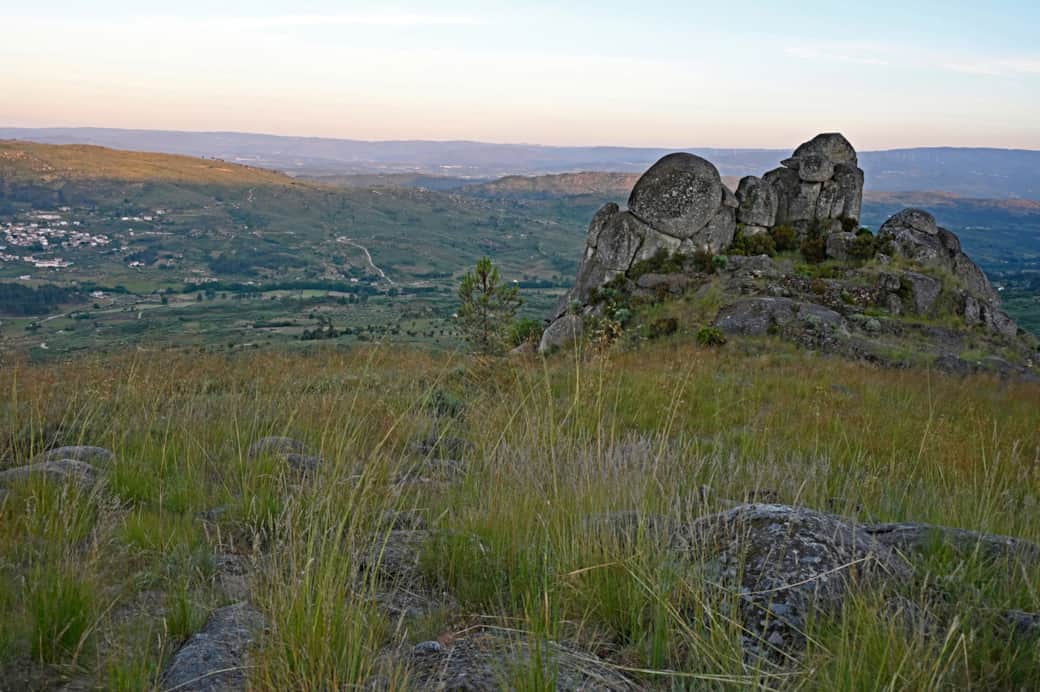
Just up the road from Muxagata is another prehistoric site that is equally impressive, Fraga da Pena. Also from the Copper Age (approximately 3000 BC), this location likewise has massive granite stones on the edge of a steep cliff face, with surrounding ramparts and walls up to 3 meters thick, built for observation of the broad valley below and ideal for defensive positioning. There is a natural amphitheater that is the host to community events throughout the year. Like Castro de Santiago, the views from Fraga da Pena are truly spectacular. We only recently discovered this particular gem but have already spent several wonderful evenings watching the sun set across the valley.
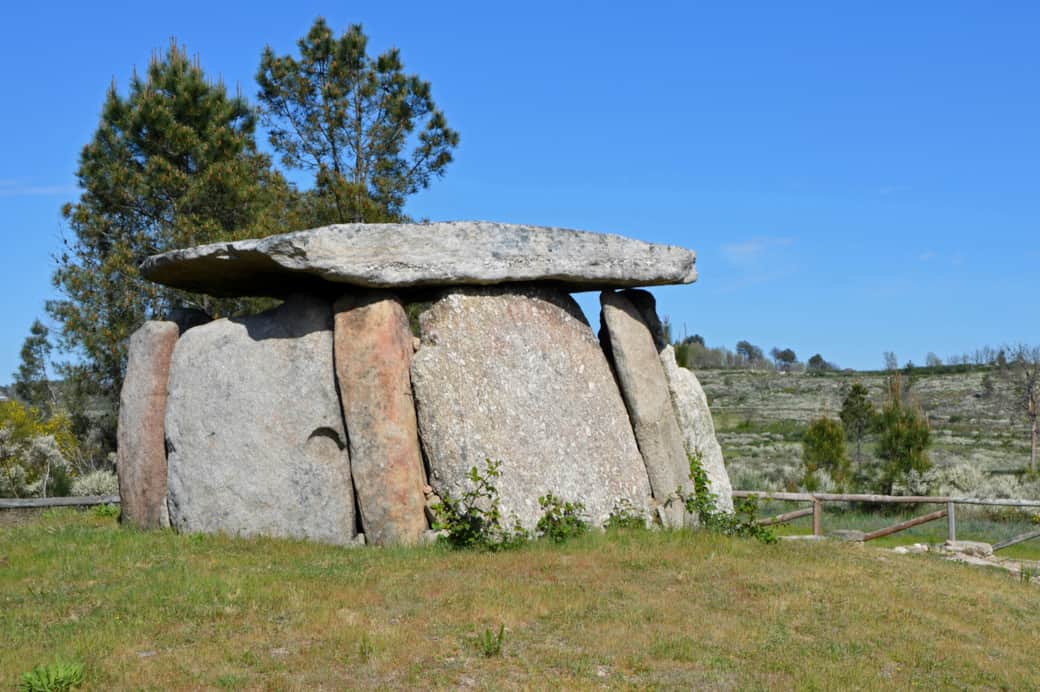
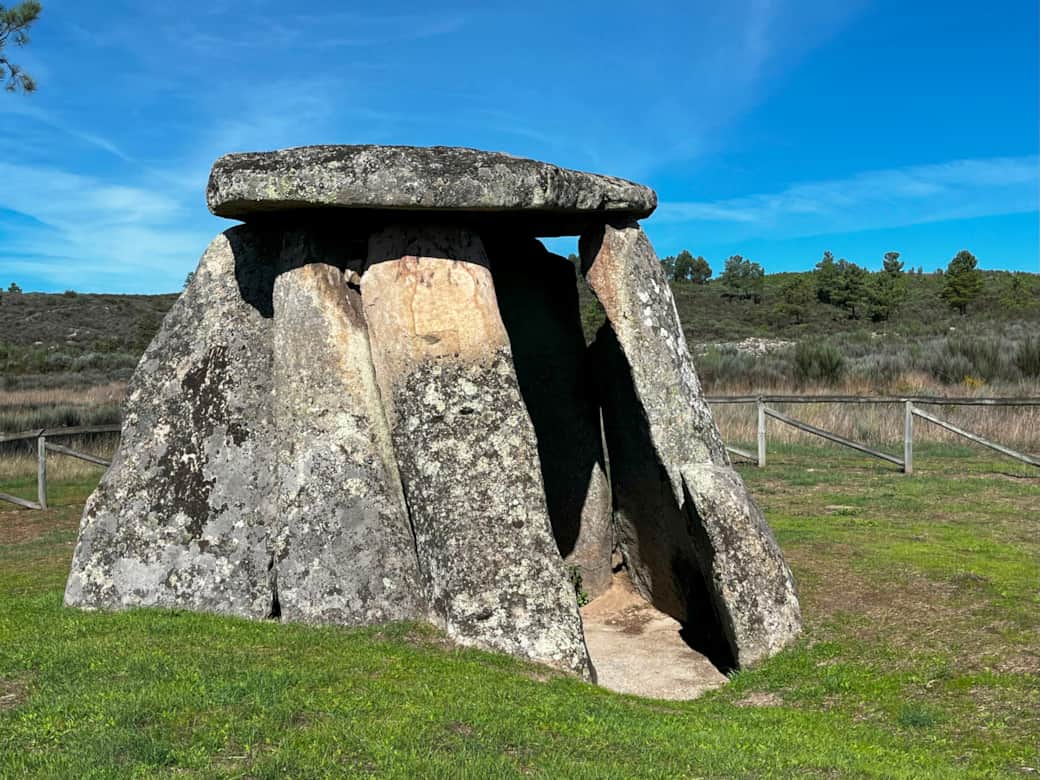
Another fascinating local site is the Dolmen (Anta) of Cortiçô, a megalithic monument dating back to around 2600 to 2900 BC. The dolmen consists of 9 enormous granite pillars placed upright to form a chamber with another large granite slab serving as the roof. These dolmens were ancient burial chambers for significant community members or tribal leaders. Some were covered with rock and earth to form burial mounds. This recently restored monument is also notable for its 4-meter access corridor. It is situated remotely from the village, in a fenced off area of a field. Seeing this massive structure never fails to evoke a sense of awe and reverence.
A few short minutes away is yet another dolmen, the Dolmen of Matança. This massive megalithic structure also consists of nine support stones with an immense roof slab. Unlike its cousin in Cortiçô, however, it does not have an entry corridor. Nevertheless, the structure itself is impressive and again leaves one marveling at the ability of prehistoric peoples to create such monuments. It is also situated off the beaten path, on a dirt road in the middle of a field outside of the village of Matança.
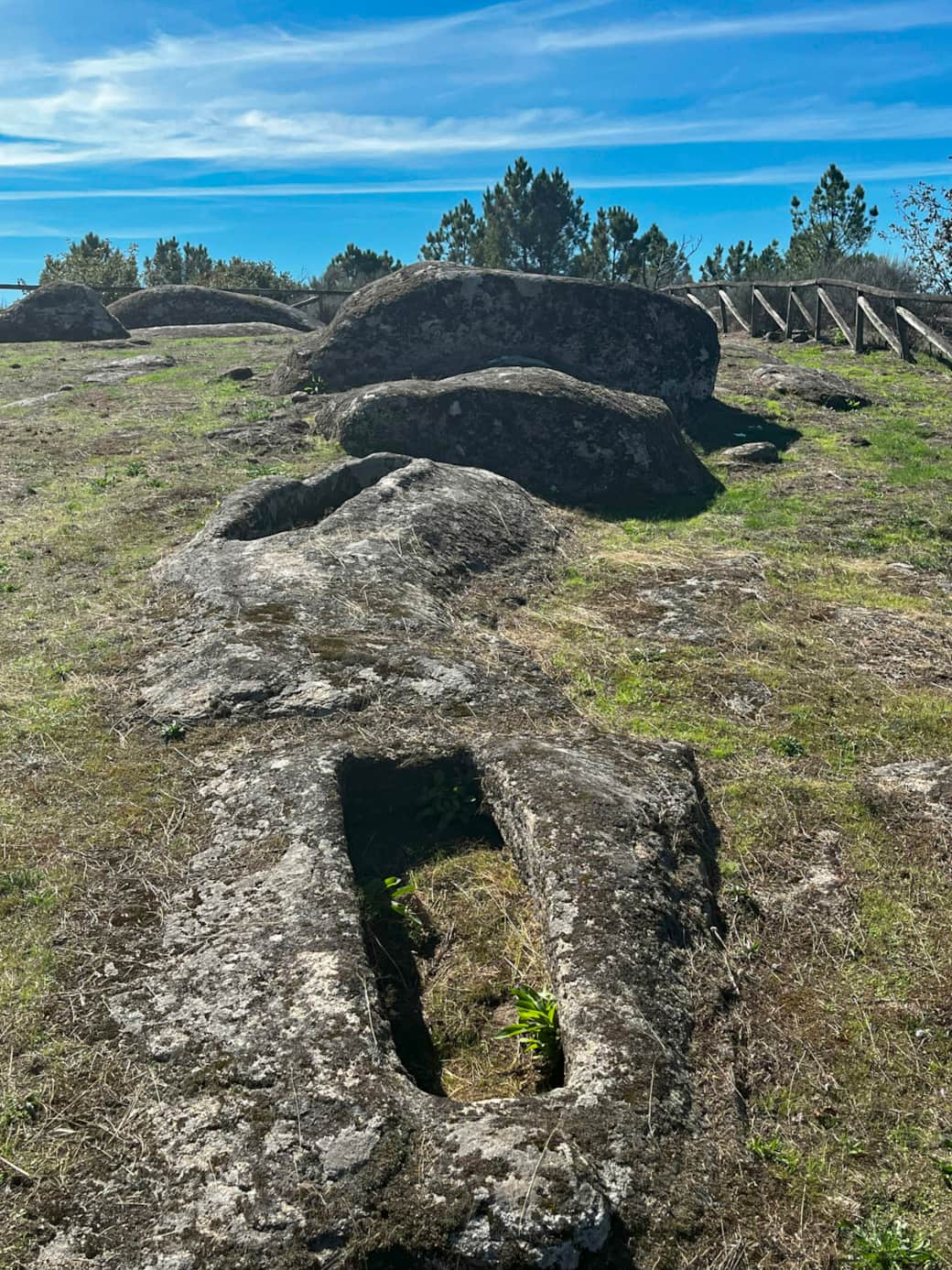
The last really interesting local site to mention is the Necropolis de Forcadas. This site has also been referred to as the “Moorish Cemetery” and is located just outside the tiny village of Forcadas. It consists of a number of graves (25) carved into the granite rock on a shallow hillside. The graves were typically covered with granite slabs, but these are no longer present, leaving the excavated granite open in the field. The graves date back to the 7th – 8th centuries, so they technically don’t fall into the “pre-history” category, but they are worth visiting nonetheless. We have at times found this site to be overgrown a bit and more challenging to access, but we always leave impressed with a rich sense of history.
The Romans also had a strong presence in northern Portugal and there are ample opportunities to see Roman bridges and roads as well.
A bit further away is the Côa Valley Archeological Park, home to a number of rock drawings (5000 +) from the Paleolithic era (22,000 to 8,000 BC). This place is so amazing that I’m going to tackle it in a separate blog post.
The North of Portugal has so much to offer visitors beyond its obvious beauty and medieval castles. We have loved discovering these various prehistoric and medieval sites. So if you are looking for a tourist experience that embraces the pre-history and history of Portugal, wrapped in the beauty of an incredible landscape, and free of other tourists, these are some of the places to visit. And best of all, you won’t have to stand in line for a ticket or to take a photograph!